 Magic Today Photography
Wedding Photography Styles
Traditional vs Candid vs Cinematic Wedding Photography: Which Style Fits You?
A practical breakdown of three styles, with typical pricing ranges in India, honest pros and cons, and a simple way to decide.
Quick summary
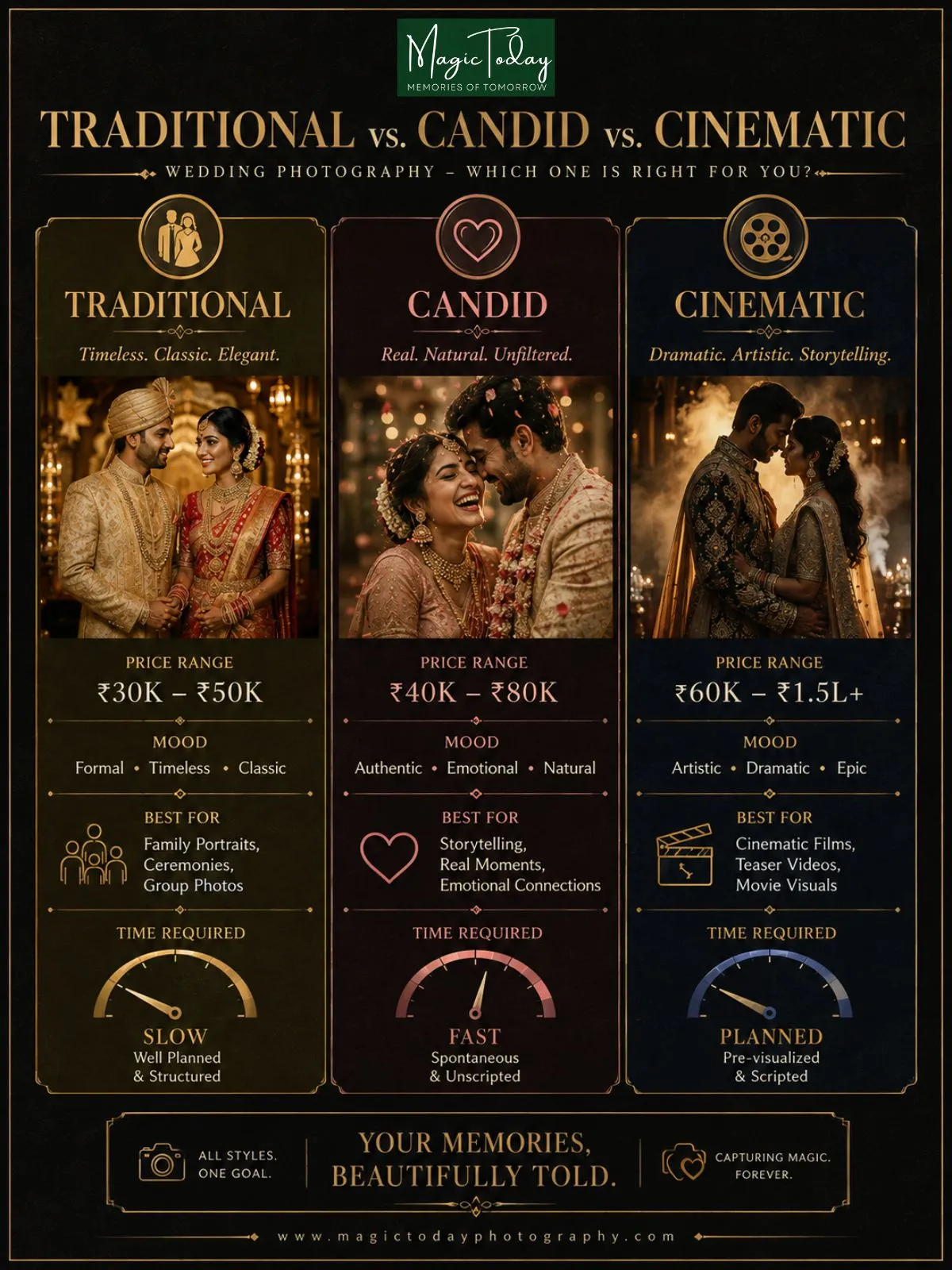
Traditional is posed and structured. Typical starting range Rs 30,000 to Rs 50,000. Works well for formal rituals and family portraits.
Candid is unposed and emotional. Typical starting range Rs 70,000 to Rs 3,00,000. Works well for couples who want real moments.
Cinematic is dramatic and artistic. Typical starting range Rs 3,00,000 and up. Works well if you want movie-like visuals.
Most couples end up mixing styles. The typical split is around 70 percent candid and 30 percent traditional. Keep reading to see which mix suits you.
All prices shown are indicative starting ranges only. Actual pricing may vary based on event duration, location, deliverables, team size, travel, and specific requirements. Always request a custom quote.
The conversation that started this post
A Bride, Three Opinions, and One Big Decision
The bride's mother was pacing near the door. The groom's father kept checking his watch. Meera sat in front of the mirror, hands trembling slightly while the makeup artist worked on her final touches.
She was not nervous about the vows. She was not nervous about the crowd waiting downstairs.
She was nervous about the photos.
"I still don't know what style to pick," she told me during our consultation three months earlier. "My mother wants traditional family portraits. My best friend says candid is the only option. My fiance keeps sending me cinematic reels he found on Instagram. I feel stuck."
She was not the first bride to say this. I hear some version of it at almost every consultation.
If you are planning a wedding right now, you have probably had this conversation too. Maybe with your partner. Maybe with your parents. Maybe with yourself at 2 AM while scrolling through photographer portfolios and feeling more confused than when you started.
The style you pick does more than change how your photos look. It changes how you experience your wedding day. It changes what you feel when you open that album twenty years from now.
So let us walk through all three styles. No jargon. No pressure. Just a clear look at what each one really means and how to figure out which one is right for you.
What is Candid vs Cinematic Wedding Photography?
If you are searching for the difference between candid and cinematic photography, the simplest explanation is this: Candid is about capturing reality as it happens, while cinematic is about creating a movie-like reality.
Candid photography is unposed. The photographer acts as a silent observer, capturing real emotions, laughter, and tears without directing you. Cinematic photography is art-directed. The photographer scouts locations, sets up dramatic lighting, and frames shots to look like scenes from a film.
Many modern couples ask, "What is candid and cinematic photography combined?" This is known as a hybrid approach, where you get the raw emotion of candid shots alongside a few highly stylized cinematic portraits during golden hour. You can read more about this in our Hybrid Approach section below.
Traditional vs Candid Photography: The Key Differences
When comparing candid photography vs traditional photography, the main difference lies in control. In traditional photography, the photographer directs everything—where you stand, how you hold your hands, and where your family looks. It is structured and formal.
In candid photography, you are not directed. You just live your wedding day, and the photographer captures it. Traditional guarantees you get every family portrait and ritual documented step-by-step. Candid guarantees you get the raw, unguarded moments that traditional photography often misses.
Most couples today choose a mix of both: around 70% candid coverage and 30% traditional family portraits.
Traditional Wedding Photography: The Classic Approach
What it actually is
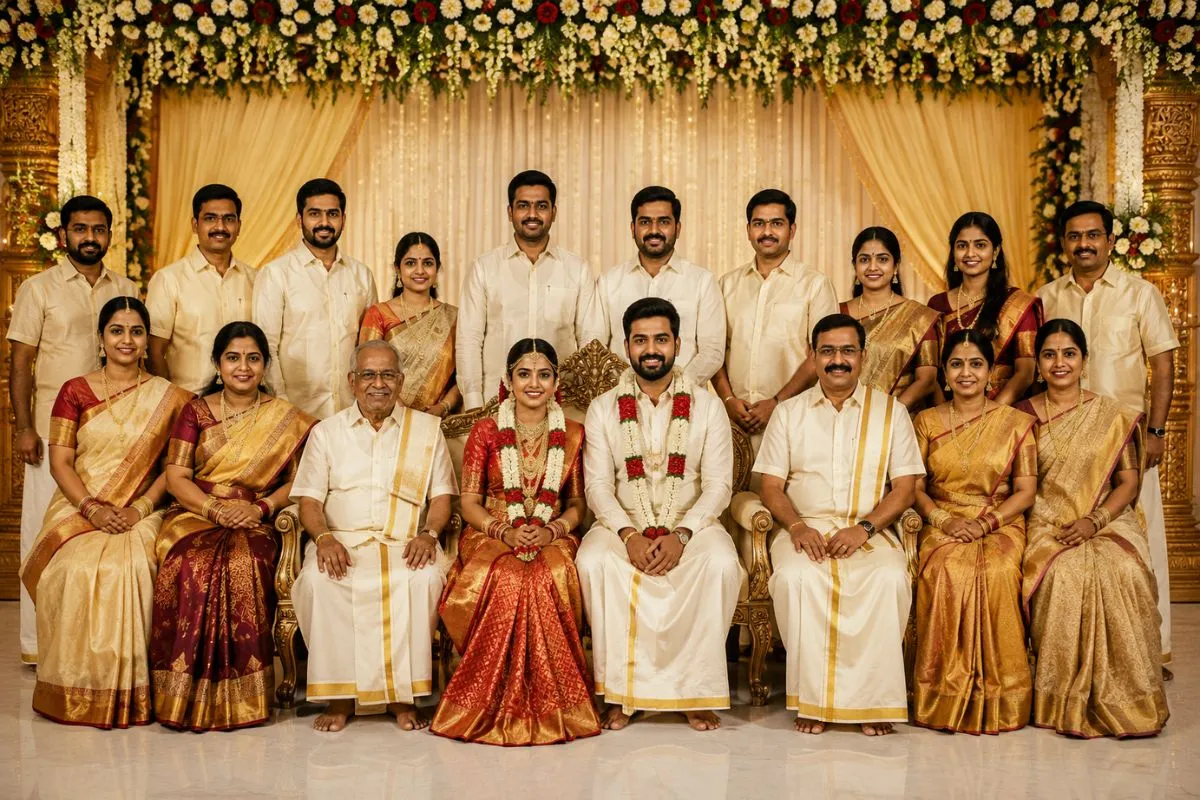
Traditional wedding photography is what your parents and grandparents likely had at their weddings. Posed. Structured. Formal. The photographer directs everything. Where you stand. How you hold your hands. Where your family members should look. It is essentially an organized photoshoot that happens to take place on your wedding day.
The photographer arrives with a shot list. Family portraits with specific groupings. Couple portraits in specific locations. Rituals captured from specific angles. Everything is planned ahead of time.
Where it works well
Traditional photography is predictable. In the middle of an Indian wedding, predictability is worth a lot. I know exactly which shots I need. I know how long each setup takes. I can move through family portraits efficiently, making sure no auntie is left out and no cousin is blinking.
There is a reason this style has lasted for decades. It delivers. Every ritual gets documented. Every important person gets a portrait. The album tells the story in order, from start to finish, with no gaps.
Where it falls short
While you are standing still for a posed shot, life keeps happening around you. Your grandmother is crying in the corner. Your niece is dancing like nobody is watching. Your best friend is whispering something hilarious in your ear.
Traditional photography captures the ceremony. It does not always capture the feeling. If you are worried about how long family portraits will take, our hour-by-hour wedding day timeline can help you plan realistic slots.
What it typically costs
Traditional photography is usually the most affordable option. In India, typical starting ranges for traditional wedding photography run from Rs 30,000 to Rs 50,000 for a single day. It needs less specialized equipment, less editing time, and less overall production work than other styles.
If you want to understand exactly where your money goes, our pricing breakdown guide explains every line item.
Who it suits
- Your family expects formal group portraits
- You have detailed rituals that need thorough documentation
- You want every moment and every person captured without gaps
- You are working with a tighter budget
- You prefer classic images that will look the same in fifty years
Candid Wedding Photography: The Real Story
What it actually is
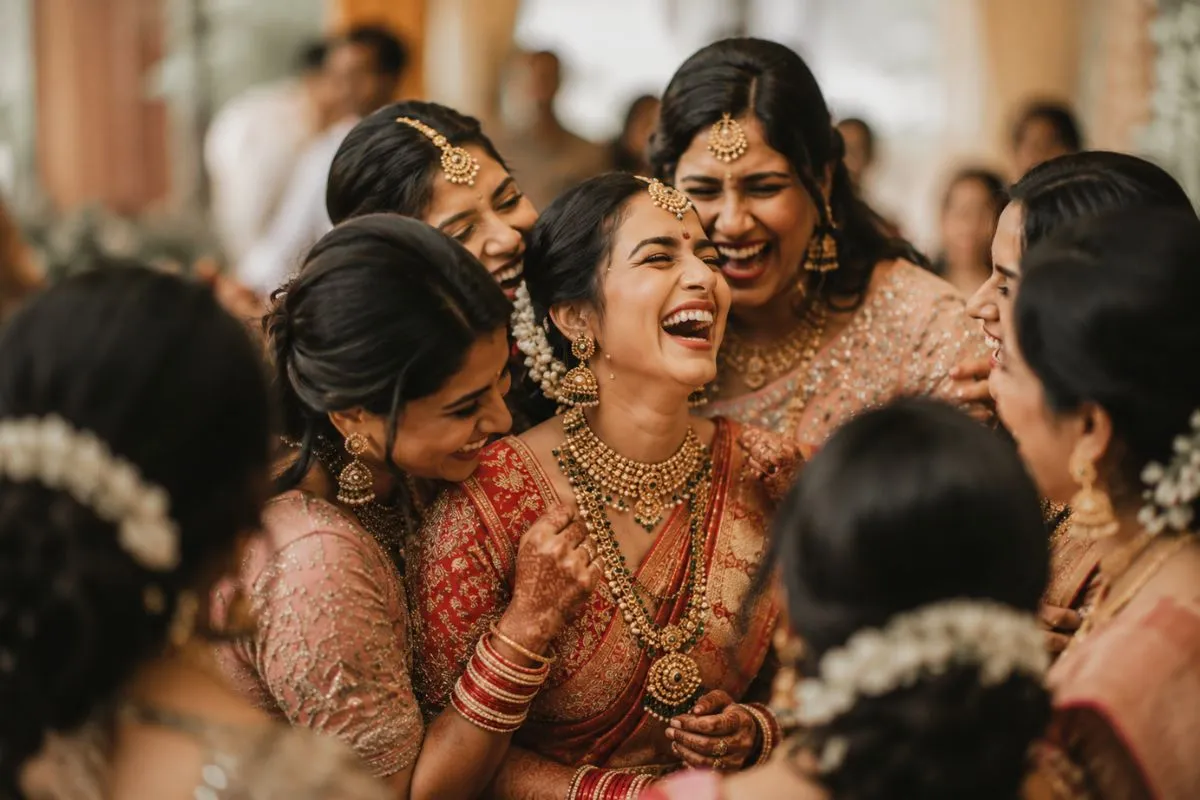
Candid photography works the opposite way. Instead of directing and posing, the photographer stays in the background and captures moments as they happen. The laughter. The tears. The unguarded glances. The spontaneous dance moves.
No "say cheese." No "look this way." Just real life, real emotions, real moments.
If you want the full breakdown of how this style works, including how photographers anticipate moments and what to look for in a portfolio, read our guide on what candid wedding photography really means.
Where it works well
I remember a wedding where the bride's father had not smiled all day. He was a stern man who kept to himself. During the kanyadaan, he suddenly broke down. His daughter was leaving, and all his toughness just melted. I was standing about fifteen feet away with my camera ready and caught the exact moment. The tear rolling down his cheek. The way his daughter reached out to hold his hand. The quiet, wordless goodbye.
That photo now sits on their mantelpiece. Not posed. Not staged. Real.
That is what candid photography does. It captures the truth of your wedding day. The chaos. The joy. The nerves. The love. More couples are asking for this kind of coverage than ever before.
Where it falls short
- It demands real skill. Fast reflexes, an instinct for anticipating moments, and the ability to work with whatever light is available.
- There are no guarantees. You might miss a fleeting moment. The lighting might not be perfect. Someone might blink.
- Not everyone is comfortable. Some guests freeze up when they notice a camera. Some families feel uneasy without structure.
What it typically costs
Candid photography costs more than traditional. Typical starting ranges in India run from Rs 70,000 to Rs 3,00,000 per day for mid-range photographers. Premium names can charge Rs 20,00,000 or more. The higher price reflects the specialized skill, experience, and equipment involved.
Who it suits
- You want your photos to feel authentic and emotional
- You do not like being posed or directed
- You trust your photographer to catch the right moments
- You value storytelling over perfection
- You are having a relaxed wedding where guests will be comfortable with a camera around
Cinematic Wedding Photography: The Movie Approach
What it actually is
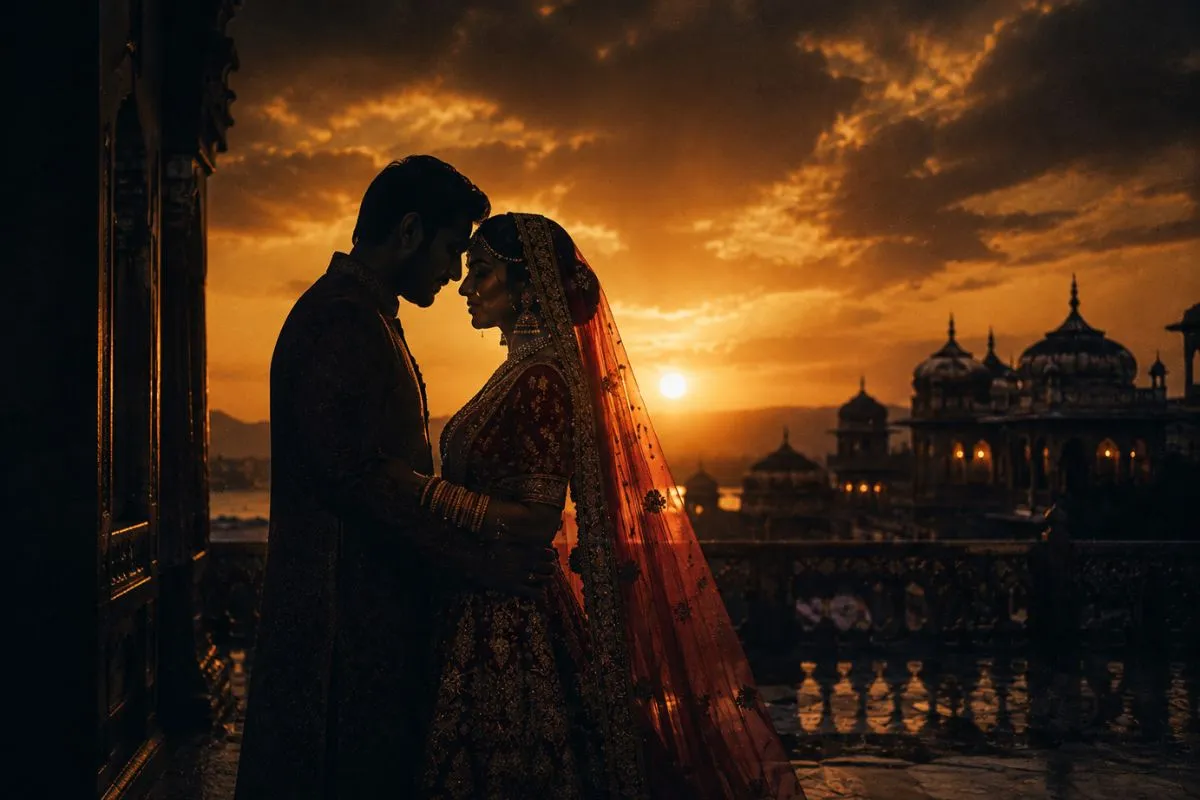
Cinematic wedding photography makes your album look like film stills. Think dramatic lighting, deep shadows, rich colors, and compositions that feel intentional and epic.
Location scouting matters a lot with this style. A plain banquet hall will not give you the same depth as a palace courtyard or a rooftop at sunset. If you are planning a cinematic pre-wedding or wedding shoot in Bangalore, our guide to the best pre-wedding locations in Bangalore covers spots that work well for dramatic frames.
Where it works well
I once shot a wedding at a palace in Rajasthan. The couple wanted cinematic coverage, so we planned carefully. We scouted locations. We timed the golden hour. We positioned lights to create dramatic shadows. We framed shots to look like scenes from a film.
The results were striking. The bride's entry looked like something out of a period film. The couple portraits had a depth and mood you cannot get from a quick snapshot. Every photo told a story.
Where it falls short
- It is highly stylized. Colors are altered for effect. If you care about natural colors, this might feel too dramatic.
- It takes more time and planning. Lighting setups, positioning, sometimes multiple takes.
- It is the most expensive option. Specialized equipment, extensive editing, and significant artistic skill all add to the cost.
What it typically costs
Cinematic wedding photography sits at the premium end. Typical starting ranges are Rs 3,00,000 and up per day. Prices vary widely depending on scope. At the luxury end, some couples spend Rs 50 lakhs or more on documentation alone.
Who it suits
- You want your wedding to look like a movie
- You love dramatic, moody aesthetics
- You are willing to invest time in planning and setup
- You trust your photographer's artistic vision
- You are having a wedding with dramatic venues, lighting, or decor
Side by Side Comparison
| Feature | Traditional | Candid | Cinematic |
|---|---|---|---|
| Posing | Posed and guided | Unposed and natural | Artistic and directed |
| Emotion | Limited, mostly formal | High emotional value | Dramatic, stylized |
| Control | Photographer directs everything | Photographer observes | Photographer creates |
| Ritual coverage | Detailed, step by step | May skip minor rituals | Selective, artistic |
| Time required | Slower due to setup | Faster and spontaneous | Requires planning time |
| Typical starting range | Rs 30K to Rs 50K per day | Rs 70K to Rs 3L per day | Rs 3L and up per day |
| Best for | Formal rituals, family portraits | Authentic storytelling | Dramatic, movie-like visuals |
Most couples today choose a mix. Around 70 percent candid and 30 percent traditional for family formals. Some also add a few cinematic portraits during golden hour.
Pricing shown reflects typical starting ranges and may vary based on event, location, deliverables, and requirements. Confirm final pricing directly with your photographer.
The Truth About Budget
Your photography budget is not just about paying for photos. It is about what kind of photos you want.
Traditional photography costs less because it needs less equipment, less time, and less specialized skill. Candid photography costs more because it demands a photographer who can anticipate moments, work in any lighting, and capture magic without direction. Cinematic photography costs the most because it is essentially art direction. Lighting setups, color grading, composition planning, and post-production artistry all go into it.
Couples today are allocating 7 to 10 percent of their total wedding budget to photography and videography. That is up from 3 to 4 percent in previous years. The reason is simple. Decor fades. Outfits get packed away. Photographs last.
If you are trying to figure out how much to set aside and where to cut costs without sacrificing quality, our wedding photography budget guide walks you through the numbers step by step.
The Stories We Do Not Always Tell
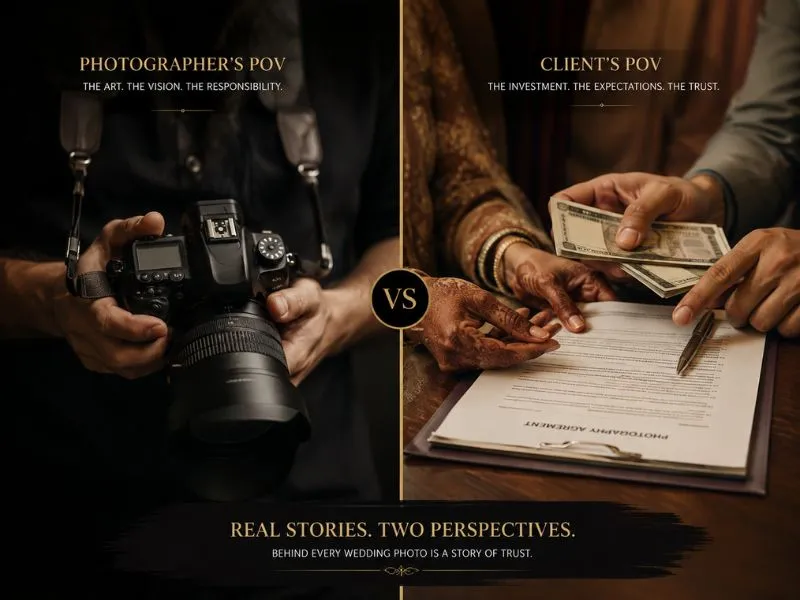
From the photographer's side
I have had clients try to bargain my rates down by half. "Just click some photos, what is the big deal?" they say. They do not realize that my pricing reflects years of experience, expensive equipment, and the fact that I am responsible for their memories.
Photographer Rahul Saharan puts it plainly. "Some want us to settle for 50 to 60 percent of the quoted price. If it is too low, I do not go more than Rs 10,000 up or down while negotiating."
I have also dealt with payment delays. Clients who promise to pay after the wedding but keep pushing the date further. Clients who assume that because they are paying, they can treat me like a vendor rather than an artist.
From the client's side
Clients face real challenges too. There are photographers who take full payment and disappear. Photographers who deliver photos months late, or never. One bride waited seven months for her wedding photos before taking matters into her own hands. Another couple had to fight for a refund after receiving just seven photos from their entire wedding.
One frustrated client wrote in a review: "It has been five months and I am still struggling to get even the complete raw data of my wedding event."
What this means for you
Communication matters. Contracts matter. Mutual respect matters.
As a photographer, I have learned to be upfront about pricing, timelines, and expectations. I have learned to walk away from clients who do not respect my work or my time.
As a client, you should do the same. Ask questions. Read reviews. Get everything in writing. Before you book anyone, go through our 30-point wedding photography FAQ. It covers contract clauses, payment schedules, delivery timelines, and the red flags that should make you walk away.
The Hybrid Approach: You Do Not Have to Choose One
Many modern couples choose a mix. Often around 70 percent candid and 30 percent posed. You get the emotional moments and the polished family portraits. You get the real story and the formal memories.
Some photographers offer what is called docu-editorial coverage. It blends candid storytelling with styled portraits. Others combine cinematic drama with candid authenticity.
The key is finding a photographer whose style matches your vision and then trusting them to deliver.
If you are thinking about a pre-wedding shoot to test the waters and get comfortable in front of the camera, we have put together 15 creative pre-wedding photoshoot ideas that range from beach sunsets to rooftop setups to simple studio sessions. Pick one that matches your comfort level.
How to Choose: A Simple Framework
- Look at your wedding. Is it formal or casual? Daytime or nighttime? Elaborate rituals or simple ceremonies?
- Look at yourself. Do you enjoy being in front of the camera? Do you hate being directed? Do you prefer posed portraits or candid moments?
- Look at your budget. How much can you realistically allocate to photography?
- Look at your priorities. What matters most? Every ritual documented? Every emotion captured? Every photo looking like art?
- Find a photographer who matches your answers.
Quick Reference
All figures are typical starting ranges and may vary by event, city, deliverables, and specific requirements.
Frequently Asked Questions
The Last Frame
Here is what I told Meera, the nervous bride from the beginning of this post:
"There is no right or wrong choice. There is only what feels like you."
She chose a mix. Candid coverage for the ceremony and reception. A short traditional session for family portraits. A few cinematic shots during golden hour. Her album tells the full story. The rituals. The emotions. The drama. The love.
That is what wedding photography should be. Not a style you settle for. A style that feels like your story.
These photos are not for Instagram. They are not for your parents. They are for you and your partner, twenty years from now, sitting together and remembering exactly how it felt to say I do.
Choose the style that lets you feel that moment forever.
Still not sure which style fits your wedding? Let us talk it through. No pressure, no sales pitch. Just an honest conversation about what will work for your day.
Book Your Free ConsultationGet In Touch